
The Rise and Fall of RAAC: Structural Legacy and Lessons Learned
CASE STUDY
Case Study Title: The Rise and Fall of RAAC: Structural Legacy and Lessons Learned
Location: United Kingdom and other countries where RAAC was widely used in public and institutional buildings
Background:
Reinforced Autoclaved Aerated Concrete, commonly known as RAAC, is a lightweight precast concrete material that was widely adopted after World War II. It was especially attractive for schools, hospitals, offices, and other public buildings because it was lightweight, economical, easy to install, and offered useful thermal performance.
At the time, RAAC appeared to provide an efficient solution for rebuilding and expanding public infrastructure. However, the material did not perform like conventional reinforced concrete. Its porous composition, limited reinforcement protection, and sensitivity to moisture created long-term durability concerns that were not always fully understood when it was first introduced.
As many RAAC buildings aged, engineers and building authorities began reassessing whether the material could continue to perform safely beyond its expected service life.
What Happened:
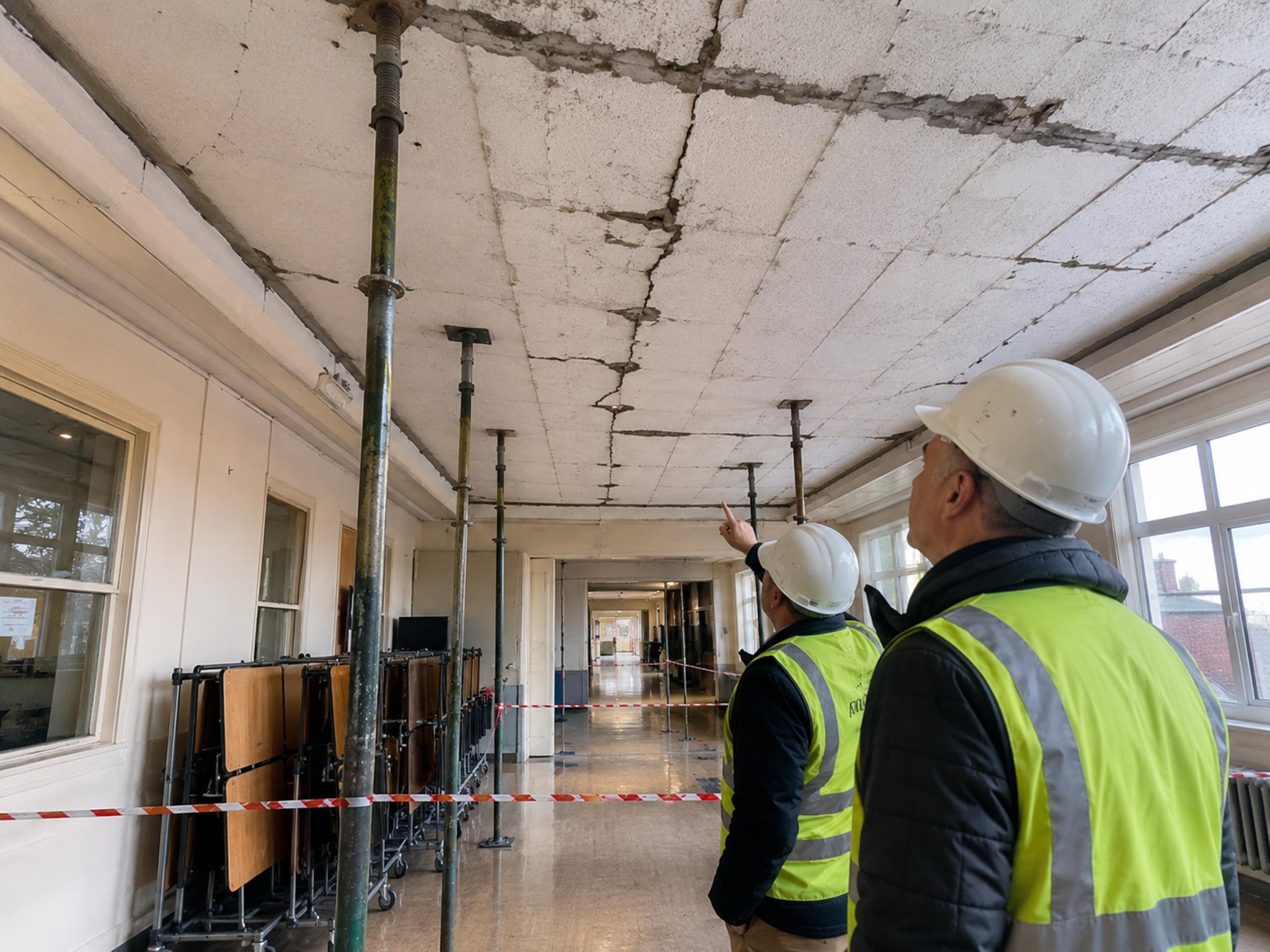
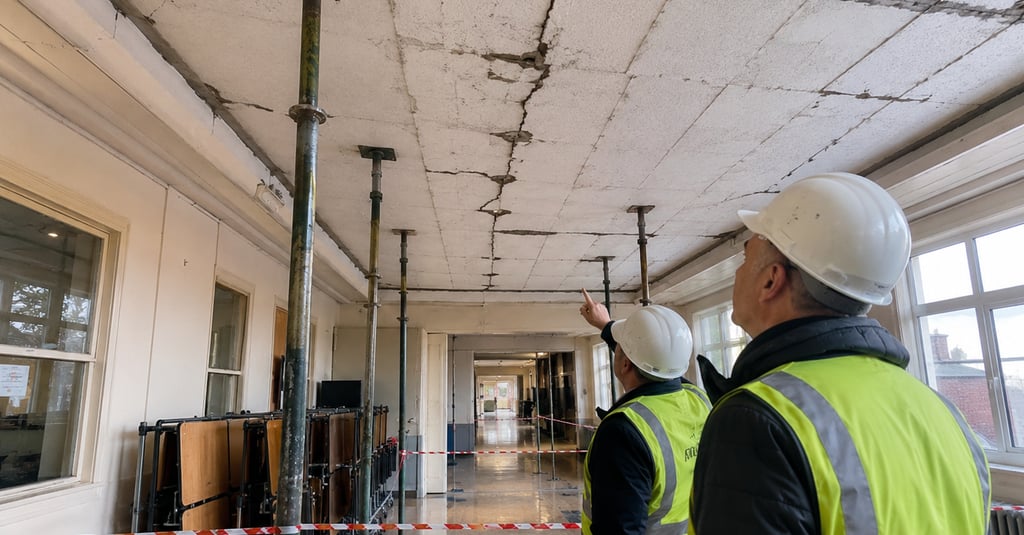
RAAC was used extensively in roof panels, floor panels, walls, and other building components. Over time, inspections began identifying deterioration, cracking, deflection, moisture damage, corrosion of reinforcing steel, and weaknesses near panel supports.
In some buildings, aging RAAC components were found to have limited warning signs before failure. This raised serious concerns because panels that appeared serviceable from below could still contain internal deterioration or inadequate bearing at their supports.
As more buildings constructed with RAAC approached or exceeded their anticipated useful life, governments, engineers, schools, hospitals, and property owners faced growing pressure to identify affected structures and determine whether they required monitoring, reinforcement, restricted access, or complete replacement.
The material that had once been promoted as a modern and efficient building solution became the subject of urgent inspection programs and major public safety discussions.
Building or Construction Issues Involved:
RAAC differs significantly from conventional reinforced concrete. It contains air pockets that make it lighter, but also more porous and less dense. This affects its strength, durability, and resistance to moisture.
Major building and construction concerns include:
Moisture entering the porous concrete
Corrosion of embedded reinforcing steel
Cracking and deterioration around reinforcement
Deflection or sagging of roof and floor panels
Insufficient bearing where panels rest on walls or beams
Weaknesses around panel ends and structural supports
Difficulty detecting internal deterioration through visual inspection alone
Alterations, leaks, or added loads that were not considered in the original design
Components remaining in service beyond their expected useful life
RAAC panels may also behave differently depending on their manufacturing quality, installation, exposure conditions, maintenance history, and the way the building has been modified over time.
Safety Lessons:
Buildings containing RAAC should be identified, documented, and assessed by qualified structural professionals. The absence of obvious cracking or visible damage does not automatically mean that a panel is safe.
Inspections should consider the condition of the concrete, reinforcement, panel ends, roof coverings, waterproofing systems, bearing lengths, deflection, moisture exposure, and any changes made to the building since construction.
Where deterioration or uncertainty is identified, appropriate measures may include temporary supports, restricted access, load limitations, monitoring, structural reinforcement, or replacement of affected components.
The broader lesson is that building materials should not be judged only by their performance when newly installed. Their long-term durability, exposure conditions, maintenance requirements, and expected service life must also be considered.
Building owners and public agencies should not wait for a failure before acting. Proactive surveys and planned remediation are safer and often more manageable than emergency closures and repairs.
Lance's Commentary:
RAAC is a good example of how an innovative building material can solve immediate construction needs while creating long-term challenges that may not become apparent for decades.
When RAAC was introduced, it offered several benefits. It was lightweight, energy-efficient, and relatively economical. However, no building material should be considered permanent or maintenance-free. Its actual performance depends on design, installation, environmental exposure, inspection, and continued care.
The concern is not simply that RAAC exists in a building. The real concern is whether anyone knows where it is, what condition it is in, whether it has been exposed to moisture, and whether it is still capable of safely carrying the loads placed upon it.
This situation also demonstrates the importance of accurate building records. Owners and facility managers cannot properly maintain a building if they do not know what materials were used or where critical components are located.
The lesson from RAAC is clear: when a material reaches a critical point in its service life, inspection and action should not be delayed. Public safety must come before convenience, cost concerns, or the desire to keep a building open without first confirming that it remains structurally sound.


Lance Luke 2026 © International Building Expert
LANCE LUKE
International Building Expert — Commentary, Books & Global Insights
Building safety expertise across continents. From forensic analysis to historic preservation.
CONNECT
(808) 754-3425
lanceluke@hawaiibuildingexpert.com