
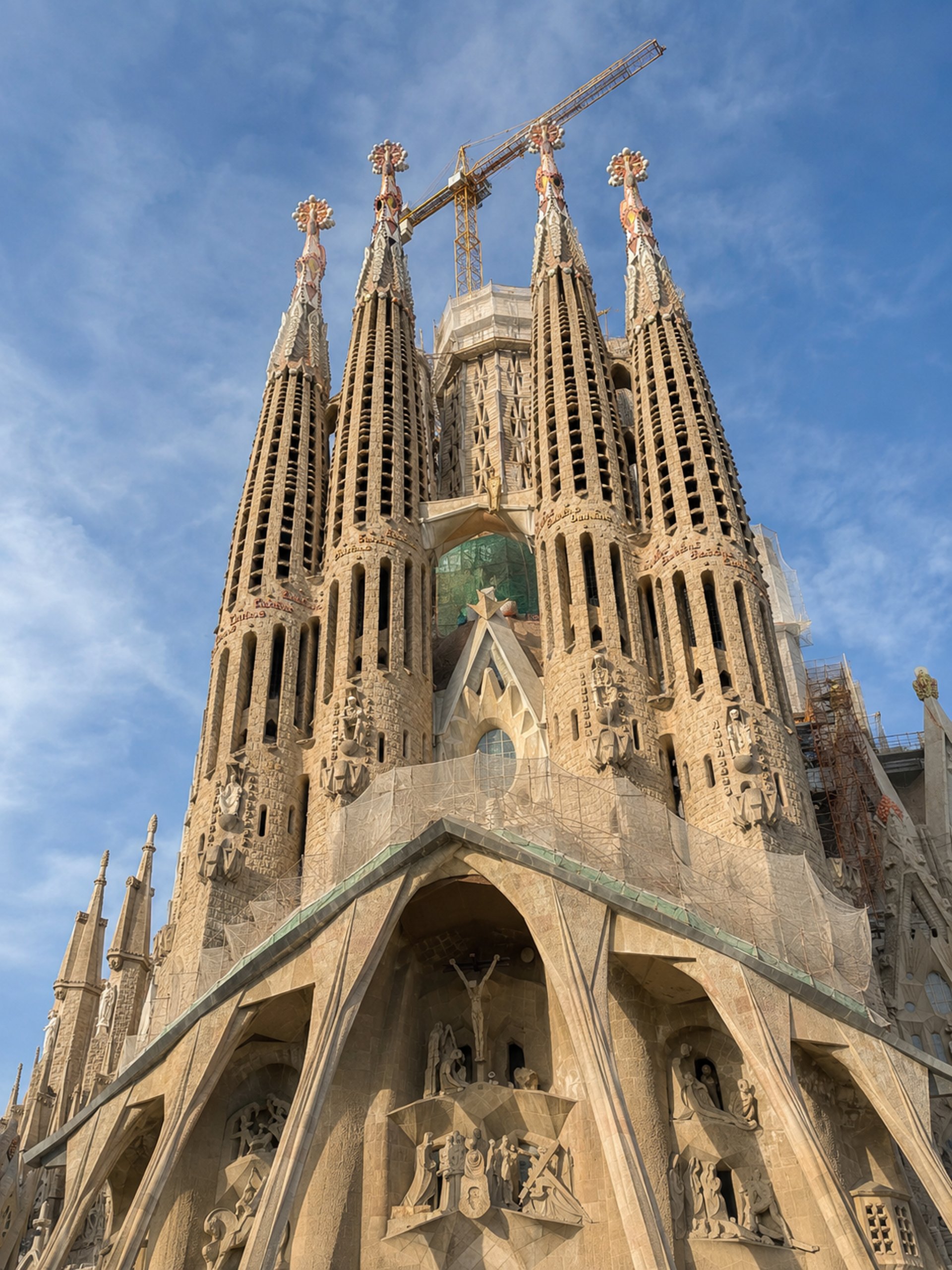
The Sagrada Familia: More Than a Century of Architectural Vision and Construction
CASE STUDY
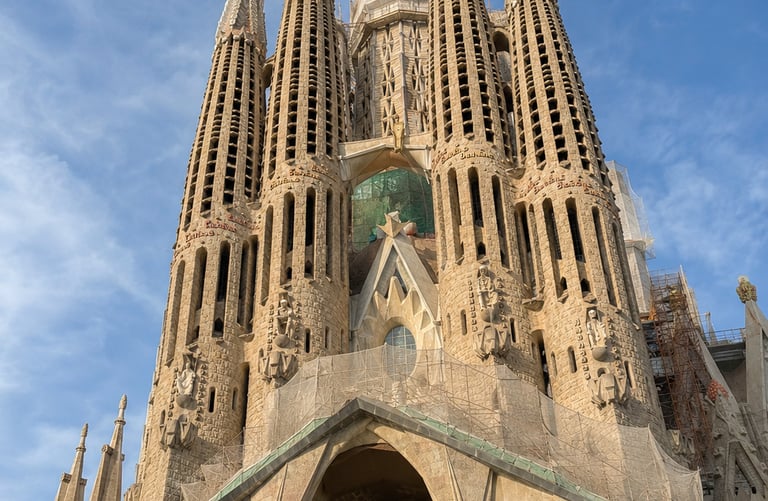
Case Study Title: The Sagrada Familia: More Than a Century of Architectural Vision and Construction
Location: Barcelona, Spain
Background:
The Sagrada Familia is one of the world's most recognizable religious and architectural landmarks. Construction began in 1882 under architect Francisco de Paula del Villar, with Antoni Gaudí taking over the project the following year. Gaudí transformed the original concept into an extraordinary combination of Gothic architecture, Art Nouveau influences, organic forms, religious symbolism, and designs inspired by nature. Rather than relying only on conventional drawings, Gaudí also developed physical three-dimensional models to explore and communicate his complex architectural ideas.
The project eventually became much larger than the work of a single architect or generation. After Gaudí's death in 1926, later architects and builders faced the difficult responsibility of interpreting his original concepts and continuing construction over many decades.
What Happened:
What began in 1882 became one of the longest-running major construction projects in modern architectural history. Progress was affected by funding challenges, Gaudí's death, the Spanish Civil War, interruptions to construction, and the challenge of continuing an extremely complex design created by an architect who could no longer personally direct the work.
According to Lance Luke's book, construction resumed in 1952 after earlier interruptions and continued through successive generations of architects, engineers, craftspeople, and builders. The church was consecrated by Pope Benedict XVI in 2010 even though construction remained unfinished. At the time of Lance's account, the project was still an active construction site.
One of the project's most unusual administrative issues involved its building permit. Lance notes that an official building permit was obtained in 2019, approximately 137 years after construction began.
Building or Construction Issues Involved:
The Sagrada Familia presents an extraordinary example of long-term construction management. The project has had to deal with changing architects, evolving construction technology, funding limitations, regulatory requirements, and the challenge of interpreting and preserving Gaudí's original design vision.
Another significant challenge is translating highly artistic concepts into structures that can actually be constructed. Gaudí's use of detailed physical models illustrates the importance of visualization and planning when conventional drawings alone may not adequately communicate complicated architectural forms. Later architects had to study surviving papers, scale models, and other materials to understand how the project should continue.
The project also demonstrates the complexity of maintaining an active construction site within one of the world's most heavily visited cultural and religious attractions. During Lance's visit, tower cranes were actively moving construction materials, construction noise could be heard from the street, and certain areas were closed to visitors because safety remained a priority.
Safety Lessons:
The Sagrada Familia demonstrates that construction safety must remain a priority regardless of a project's cultural importance, architectural prestige, or duration. When construction continues while portions of a building remain accessible to visitors, there must be clear separation between active work zones and public areas.
The project also provides broader lessons for construction management. Complex projects require accurate documentation, continuity of design information, careful coordination between generations of professionals, and clear regulatory oversight. Building permits and approvals should be addressed as an essential part of the construction process rather than treated as an administrative issue that can be resolved later.
Perhaps most importantly, the Sagrada Familia shows the value of long-term planning. A project that extends beyond the career or lifetime of its original designer must have enough documentation and design information for future architects, engineers, and builders to understand the original intent while safely adapting construction methods to modern standards.
Lance's Commentary:
For Lance, the Sagrada Familia is not simply a famous church. It is an opportunity to look at architecture from the perspective of someone who has spent decades around buildings and construction. After personally visiting the site, he described it as a masterpiece of art and architecture and focused not only on its appearance, but also on the enormous amount of planning and work required to turn such an ambitious vision into a physical structure.
One aspect that particularly impressed Lance was seeing Gaudí's three-dimensional models. His observation was simple but important: people often do not realize how much work goes into designing something this massive before construction even begins.
From a construction perspective, the Sagrada Familia is also a reminder that great buildings require more than great ideas. They require funding, permits, skilled professionals, careful planning, documentation, and the ability to maintain the original vision across generations. More than a century after construction began, the project demonstrates both the possibilities and the challenges that come with creating a building intended to outlast the people who first imagined it.
And as Lance humorously points out when discussing the extraordinary permit timeline, anyone frustrated about waiting two years for a building permit can take some comfort in knowing that the Sagrada Familia's permit story stretched across more than a century.
Related Books/ Articles:
The Sagrada Familia: A Masterpiece of Art and Architecture, A Journey Through Its History by Lance Luke. The book covers the building's architectural vision, Antoni Gaudí, design details, size and dimensions, building permit issues, and its construction phases and progress.


Lance Luke 2026 © International Building Expert
LANCE LUKE
International Building Expert — Commentary, Books & Global Insights
Building safety expertise across continents. From forensic analysis to historic preservation.
CONNECT
(808) 754-3425
lanceluke@hawaiibuildingexpert.com