
Inferno by Design: When a Fire Exposes Everything We Got Wrong
Drawing from Lance Luke’s book Inferno by Design, this blog examines how the Wang Fuk Court fire exposed serious failures in building design, fire safety, construction oversight, and emergency preparedness. It is a powerful reminder that real building safety goes beyond paperwork and starts with proper materials, inspections, maintenance, and accountability.
I have spent more than four decades walking through buildings, inspecting construction, managing projects, and studying what happens when things go wrong.
When I see a major building fire, I do not just see flames.
I see decisions.
I see the materials that were selected. I see the work that was approved. I see the safety systems that were supposed to protect people. And sometimes, I see the shortcuts that seemed small during construction but became deadly during an emergency.
That is what stood out to me about the Wang Fuk Court fire.
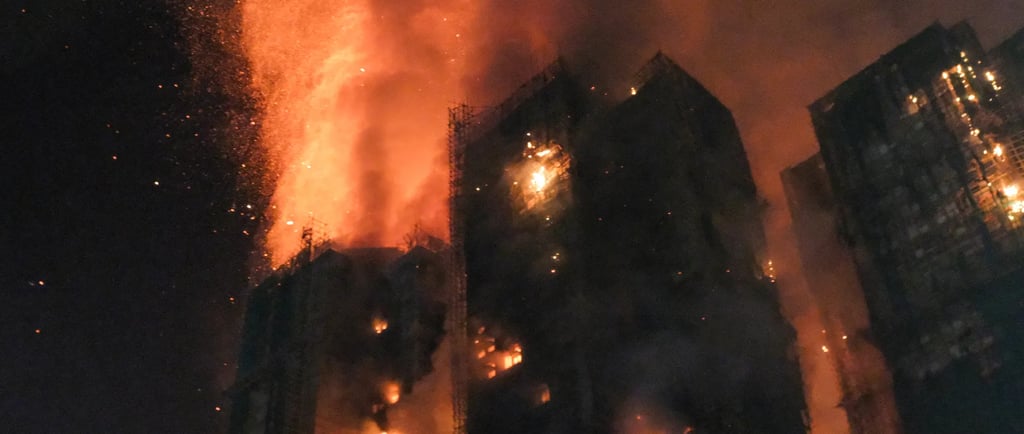
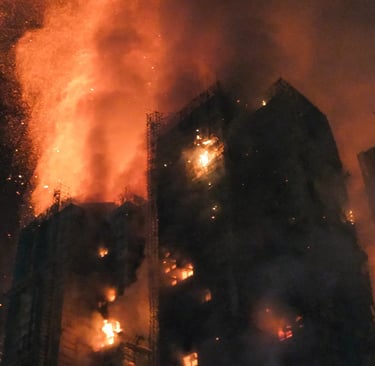
This was more than a tragic fire. It exposed what can happen when aging buildings, questionable materials, failed safety systems, poor oversight, and inadequate emergency planning come together at the worst possible time.
A Building Should Not Help a Fire Spread
Fire is already dangerous. A building should be designed to slow it down, contain it, and give people time to escape.
But when combustible materials are introduced during renovation, alarms fail to work, windows are sealed, and escape routes become filled with smoke, the building itself can become part of the problem. The conditions described at Wang Fuk Court included foam insulation, exterior scaffolding mesh, sealed windows, and centrally located stairwells that created serious concerns once the fire began spreading.
Here is the question we should always ask during construction and renovation:
How will this material perform in a fire?
Not how cheap it is.
Not how fast can we install it?
Not only does it look good.
Will it help protect people when something goes wrong?
That question needs to be answered before a product is installed, not after a fire.
Renovation Can Change How a Building Behaves
People often think of renovation as an improvement.
Usually, it is.
But renovation can also introduce new risks when the work is not properly designed, reviewed, and inspected.
Adding insulation, replacing windows, altering façades, changing openings, or installing new materials can affect how fire and smoke move through a building.
At Wang Fuk Court, the book describes foam insulation and other materials installed around windows during renovation. It also raises concerns about exterior mesh that allegedly failed to perform as expected when exposed to fire.
The lesson is simple.
When you change a building, you may also change how that building performs during an emergency.
That is why renovations, especially on older high-rise buildings, require serious oversight.
Safety on Paper Is Not Enough
A permit does not stop a fire.
An inspection report does not guarantee that every system will work five, ten, or twenty years later.
Buildings age. Systems deteriorate. Fire alarms need maintenance. Sprinklers need inspection. Renovations can interfere with existing safety systems. Materials can be substituted.
That is why building safety cannot be treated as a one-time checklist.
The real question is not whether the building passed inspection years ago.
The question is:
Is the building safe today?
At Wang Fuk Court, the book points to alarms that reportedly failed to provide residents with the warning they needed. When an alarm does not work during an emergency, people lose something extremely valuable: time.
And during a fire, minutes matter.
Sometimes seconds matter.
Emergency Plans Must Match the Building
High-rise emergency procedures depend on the building's safety systems working as intended.
If residents are told to shelter in place, the building must be capable of protecting them while they wait.
Fire-resistant construction must contain the fire.
Alarms must work.
Escape routes must remain usable.
Smoke must be controlled.
Emergency responders must be able to reach the people who need help.
When those systems fail together, a safety strategy can quickly become a dangerous situation.
A plan is only as good as the building supporting it.
Older Buildings Cannot Be Ignored
Wang Fuk Court should also make us look at aging buildings everywhere.
Many older high-rises were constructed under different building codes and fire-safety requirements. Over the years, they may have gone through multiple renovations involving different owners, contractors, consultants, and inspectors.
The original building may have changed significantly.
But did the fire protection change with it?
Did the emergency plan change?
Were new materials properly evaluated?
Are the alarms still working?
Are the escape routes still safe?
These are questions every building owner, property manager, condominium association, and safety professional should be asking.
We should not wait until after a fire to discover the answers.
Fire Doesn't Lie
One thing I have learned in this business is that fire exposes everything.
It exposes bad materials.
It exposes poor maintenance.
It exposes weak planning.
It exposes safety systems that were supposed to work but did not.
Most importantly, it exposes the difference between a building that looks safe and one that is actually prepared.
After every major building disaster, people ask the same question:
How did this happen?
I think we should be asking a different question much earlier:
What can we find and fix before something happens?
That is where proper inspections, qualified professionals, tested materials, construction management, maintenance, and independent oversight make a difference.
The Bottomline
The Wang Fuk Court fire is not just a warning about one building or one city.
It is a reminder for all of us.
Building safety does not end when construction is completed or when a permit is signed. It requires constant attention. Buildings age. Renovations change them. Materials deteriorate. Systems fail.
We need to inspect before there is a problem.
We need to maintain safety systems before they are needed.
We need to question materials before they are installed.
And we need to take warning signs seriously before they become headlines.
Because after a fire, we can usually see what went wrong.
The real goal is to see it before the fire starts.
Lance Luke
National Building Expert


Lance Luke 2026 © International Building Expert
LANCE LUKE
International Building Expert — Commentary, Books & Global Insights
Building safety expertise across continents. From forensic analysis to historic preservation.
CONNECT
(808) 754-3425
lanceluke@hawaiibuildingexpert.com