
The Iron Lady’s Health Check: What the Eiffel Tower Teaches Us About Preventative Maintenance
As a building inspector and construction manager who has spent over 45 years inspecting everything from high-rise condos to historic commercial properties, I always tell people: buildings are just like human bodies. If you skip your regular checkups and ignore the early signs of wear, a minor issue will eventually turn into a major, budget-busting structural failure.
As a building inspector and construction manager who has spent over 45 years inspecting everything from high-rise condos to historic commercial properties, I always tell people: buildings are just like human bodies. If you skip your regular checkups and ignore the early signs of wear, a minor issue will eventually turn into a major, budget-busting structural failure.
Nowhere is this lesson more apparent than in one of the most famous structures in the world: The Eiffel Tower.
Known affectionately as the "Iron Lady," this 1,083-foot Parisian icon is a masterclass in civil engineering. But behind her photogenic, yellow-brown luster lies a constant, grueling battle against a silent structural killer: rust.
Let’s take a look at the forensic reality of keeping this 19th-century masterpiece standing, and what you—whether you manage a commercial asset or sit on a condo board—can learn from it.
The Anatomy of the Asset: Puddled Iron
The Eiffel Tower isn’t made of modern structural steel; it is constructed of puddled iron, a highly refined wrought iron popular during the Industrial Revolution.
The Good: Puddled iron is incredibly resilient, ductile, and handles the wind beautifully because the structure is designed to flex rather than rigidly resist.
The Bad: It has absolutely zero built-in resistance to corrosion. Left exposed to oxygen, rain, and Parisian air pollution, the iron will oxidize and turn to dust.
Gustave Eiffel himself knew this. In his own words, "Identifying and stopping the spread of rust is the biggest challenge to the construction's longevity." His prescription? A complete, bumper-to-bumper repaint every seven years.
The Diagnosis: When Maintenance Becomes "Cosmetic"
In recent years, confidential engineering reports leaked to the French media revealed that the Eiffel Tower was in a severely degraded state, riddled with widespread rust stains and structural cracks.
Why did this happen to a building with a dedicated maintenance crew? Because of deferred maintenance and cosmetic shortcuts.
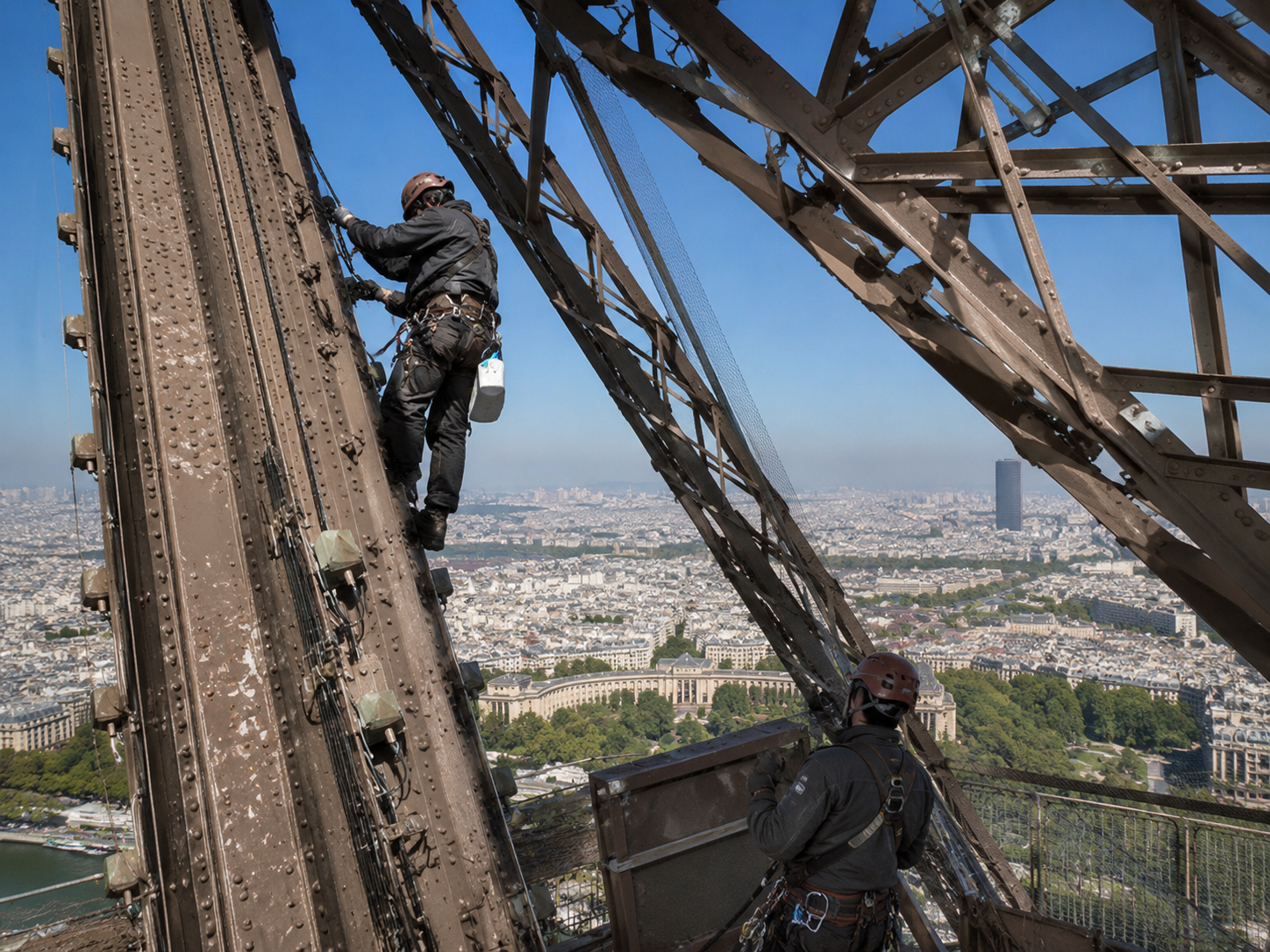
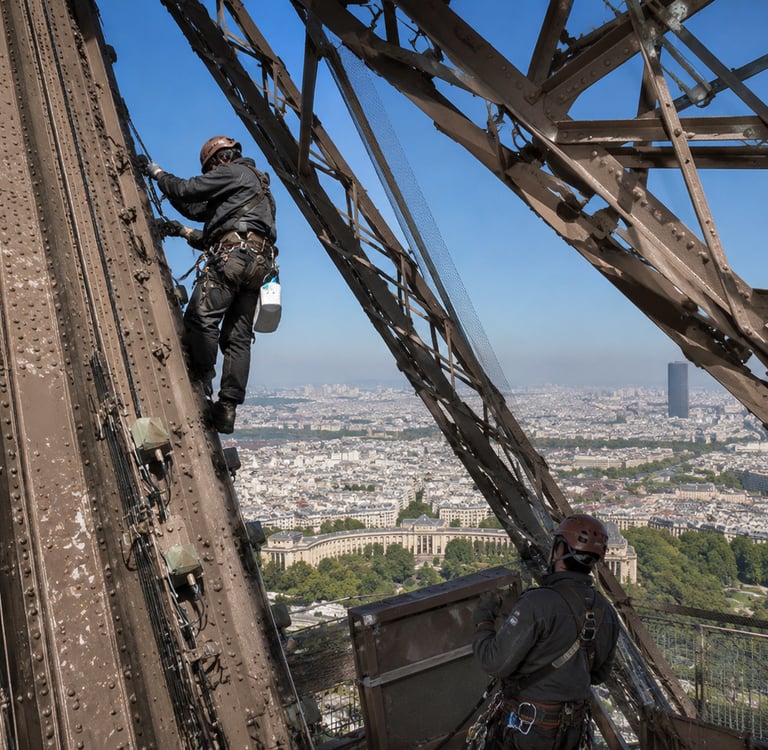
Instead of stripping the metal down to its bare bones, treating the corrosion, and rebuilding the protective barrier, past campaigns often layered fresh paint directly over old, peeling coats.
Lance's Rule of Thumb: Layering paint over existing rust is like putting a shiny new band-aid over an infected wound. It looks fine on the surface, but underneath, the rot continues to spread.
To properly preserve a metal or concrete structure, you have to follow a strict diagnostic procedure:
Piquage (Stripping): Chipping away old, lead-laden paint layers to expose the raw material underneath.
Structural Repair: Replacing rusted-out rivets or reinforcing compromised metal plates before applying any finish.
Multi-Layer Coating: Applying a high-performance, weather-resistant primer and intermediate anti-rust coats before the final aesthetic paint is brushed on by hand.
Because this thorough remediation was put off, the cost to save the tower has skyrocketed. The city of Paris had to approve a staggering €380 million long-term maintenance plan running through 2031 to finally address the deep-seated corrosion issues.
Key Lessons for Property Owners and Managers
You might not be managing a 300-meter iron lattice in France, but the engineering principles remain exactly the same whether you are dealing with structural wood, concrete spall, or commercial steel facades:
Aesthetic Maintenance is Not Structural Preservation: Painting a building makes it look good for potential buyers or tenants, but it does not fix structural deterioration. Always budget for deep forensic inspections.
Heed the Seven-Year Rule: Just as the Eiffel Tower requires a major cycle every seven years, your property needs a proactive Reserve Study and maintenance schedule. Don't wait for concrete to start cracking or steel to rust before you act.
Do It Right the First Time: Stripping, prepping, and painting down to the substrate is expensive and time-consuming. But doing a cheap "slap-dash" job will cost you three times as much when you have to tear it all out and do it over again.
The Bottom Line
Proactive maintenance isn’t an expense; it’s an investment in your asset's survival. Gustave Eiffel’s creation still stands today because of a commitment to constant stewardship. Keep an eye on your structures, treat the root causes of wear, and never let cosmetic fixes blind you to structural realities.
Keep your buildings safe and your investments sound!


Lance Luke 2026 © International Building Expert
LANCE LUKE
International Building Expert — Commentary, Books & Global Insights
Building safety expertise across continents. From forensic analysis to historic preservation.
CONNECT
(808) 422-2132
lanceluke@hawaiibuildingexpert.com