
What RAAC Teaches Us About Aging Building Materials
RAAC is a powerful reminder that building materials do not last forever. This blog explores what its history teaches us about aging materials, regular inspections, preventive maintenance, and the importance of understanding how buildings change over time.
I have spent more than four decades working around buildings, inspecting them, managing construction projects, and looking at what happens when materials begin to fail.
One thing I have learned is simple:
Just because a material worked yesterday does not mean we should assume it will work tomorrow.
Every building material has a life cycle.
Concrete ages.
Steel corrodes.
Wood deteriorates.
Sealants fail.
Waterproofing systems break down.
And sometimes, a material that was once considered innovative and practical develops problems that were not fully understood when it was first installed.
That is one of the important lessons we can learn from Reinforced Autoclaved Aerated Concrete, commonly known as RAAC.
I explored this subject in my book The Rise and Fall of RAAC: Structural Legacy and Lessons Learned, which looks at the history of RAAC, its widespread use, and the durability and safety concerns that eventually emerged around the material.
But the RAAC story is about more than one type of concrete.
It is a lesson about how we manage aging buildings.
What Is RAAC Teaching Us?
RAAC was once viewed as an innovative construction material.
Like many building products, it offered certain advantages that made it attractive to the construction industry. Over time, however, concerns developed about its durability and long-term performance.
That does not mean every building containing an aging material is automatically unsafe.
What it does mean is that we should never assume a building component will continue performing indefinitely simply because it has not failed yet.
That is where building owners and managers sometimes get into trouble.
The thinking becomes:
It has been there for decades.
Nothing has happened.
Why worry about it now?
Because age matters.
Exposure matters.
Moisture matters.
Installation matters.
Maintenance matters.
And conditions that were acceptable when a building was new may look very different several decades later.
The history of RAAC illustrates the complex life cycle of construction materials and why long-term safety and sustainability need to remain part of the conversation long after construction is complete.
Buildings Do Not Stay New
A building starts aging the day construction is completed.
That may sound obvious, but it is easy to forget.
Most people notice the visible signs of aging first.
Paint fades.
Sealants crack.
Metal rusts.
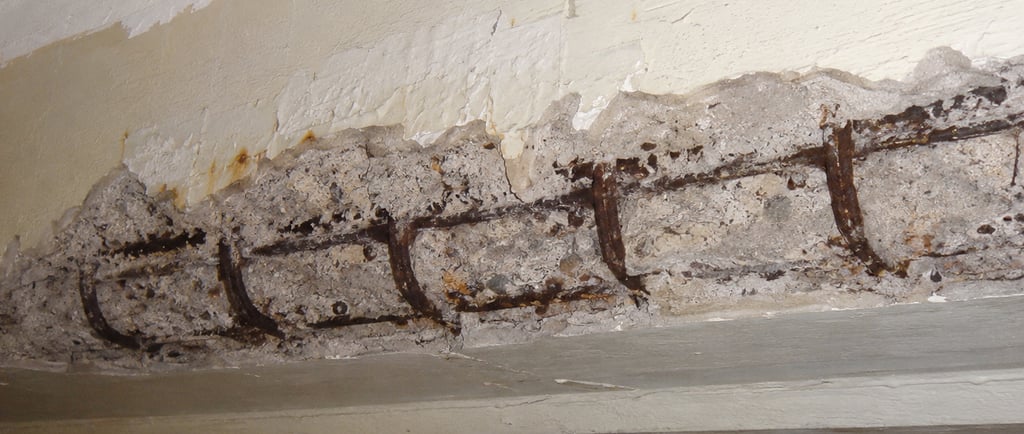
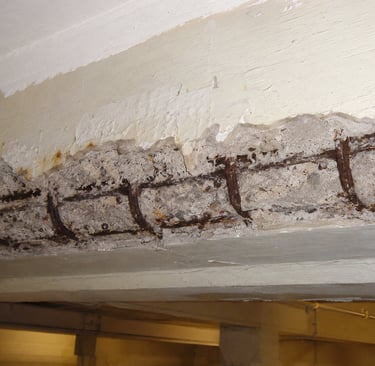
Concrete spalls.
Roofing begins to leak.
But some of the most important deterioration can happen where people cannot easily see it.
Moisture may be entering behind a wall.
Reinforcing steel may be corroding inside concrete.
Connections may be deteriorating.
Structural materials may be slowly losing their original performance characteristics.
The building may still look fine.
That is why appearance alone is never a complete measure of condition.
Yesterday's Building Material Is Today's Inspection Question
Construction is always evolving.
New products are introduced.
New systems are developed.
Building codes change.
Industry standards improve.
And sometimes, we learn more about materials only after they have been in service for many years.
RAAC reminds us that the performance of a building material needs to be considered throughout its entire life cycle, not only when the building is designed and constructed.
As I discuss in my work on RAAC, the material went from widespread adoption to growing concerns about durability and safety. The bigger lesson for the construction industry is the importance of continuing to evaluate materials as buildings age.
A material being approved decades ago does not eliminate the need to inspect it today.
Buildings change.
Materials change.
Our understanding changes.
Our responsibility is to keep paying attention.
Maintenance and Inspection Are Two Different Things
Maintenance is important.
But you cannot properly maintain something when you do not understand its condition.
That is where inspections come in.
Maintenance may involve repairing a coating, replacing a sealant, clearing drainage, or protecting a surface.
An inspection asks different questions:
What condition is the material actually in?
Is deterioration occurring?
Is moisture contributing to the problem?
Has the material exceeded its expected useful life?
Is the damage cosmetic, or could there be a larger structural concern?
Does the condition require monitoring, repair, further testing, or replacement?
These questions become increasingly important as buildings get older.
A good maintenance program does not simply respond to things that break.
It looks for problems before they become emergencies.
Water Changes Everything
If you work around buildings long enough, you learn to respect water.
Water finds openings.
Water gets behind walls.
Water reaches reinforcing steel.
Water contributes to corrosion.
Water can turn a small maintenance problem into a much larger repair.
This is particularly important when evaluating aging construction materials.
Sometimes the material itself is blamed for a failure when the bigger issue involves years of water intrusion, poor drainage, damaged waterproofing, or deferred maintenance.
That is why investigations matter.
You need to understand not only what failed, but also why it failed.
In my experience with building deterioration, conditions such as corrosion, poor waterproofing, and deferred maintenance can develop quietly until the damage becomes significant.
By the time the damage becomes obvious, the repair may already be expensive.
Deferred Maintenance Has a Price
Building owners sometimes delay maintenance because nothing appears urgent.
I understand the thinking.
Budgets are limited.
Repairs cost money.
There are always competing priorities.
But deferred maintenance does not make the problem disappear.
It usually gives the problem more time.
A small leak becomes a larger leak.
A minor crack gets bigger.
Corrosion spreads.
Concrete deterioration progresses.
Components eventually reach the point where repair is no longer enough.
The cost of doing nothing can eventually become much higher than the cost of addressing the issue early.
Preventive maintenance programs recognize this. Early signs of deterioration are often easier and less expensive to address than advanced damage, while deferred work can shorten useful life and increase repair costs.
That principle applies whether we are talking about RAAC, conventional reinforced concrete, roofing, waterproofing, structural steel, or almost any other building component.
We Need to Know What Is in Our Buildings
One of the most important lessons from RAAC is that building owners should understand what their buildings are made of.
What structural systems are present?
What materials were used?
How old are they?
Have they been modified?
What is their current condition?
What maintenance has been performed?
Are there records?
Are there inspection reports?
Too often, these questions are asked only after a problem appears.
By then, everyone is searching for old drawings, trying to determine what was installed decades ago, and wondering whether previous repairs were properly documented.
Good building management starts with information.
Know your building.
Know its history.
Know its materials.
And know which components deserve closer attention as they age.
Not Every Crack Means Disaster
There is also another side to this conversation.
We should take aging materials seriously, but we should not create unnecessary panic.
Finding an older material in a building does not automatically mean the building is about to collapse.
A crack does not always mean structural failure.
Concrete deterioration does not always mean immediate danger.
The condition needs to be evaluated.
That is why qualified inspections and professional assessments are so important.
The goal is not to scare people.
The goal is to understand the condition, evaluate the risk, and make informed decisions about what needs to happen next.
Good building safety is based on facts.
Not assumptions.
Not panic.
And definitely not waiting until something falls down.
The Bottomline
RAAC teaches us a lesson that applies to every building.
Materials age.
What was considered acceptable decades ago may require a closer look today.
That does not mean every older building is unsafe.
It means every aging building deserves attention.
Inspect the materials.
Understand the building's history.
Watch for deterioration.
Keep water out.
Maintain protective systems.
Document repairs.
And when something does not look right, investigate it before the problem has time to grow.
Buildings usually give us warning signs.
The challenge is noticing them and taking action.
Because the best time to learn that a material is reaching the end of its useful life is during an inspection.
Not during a failure.
Lance Luke
National Building Expert
Author of The Rise and Fall of RAAC: Structural Legacy and Lessons Learned


Lance Luke 2026 © International Building Expert
LANCE LUKE
International Building Expert — Commentary, Books & Global Insights
Building safety expertise across continents. From forensic analysis to historic preservation.
CONNECT
(808) 754-3425
lanceluke@hawaiibuildingexpert.com