
Why Historic Buildings Require Specialized Maintenance
Historic buildings require more than routine maintenance. This blog explores why specialized care, proper inspections, compatible repair materials, and experienced professionals are essential to preserving aging structures while keeping them safe, functional, and standing for future generations.
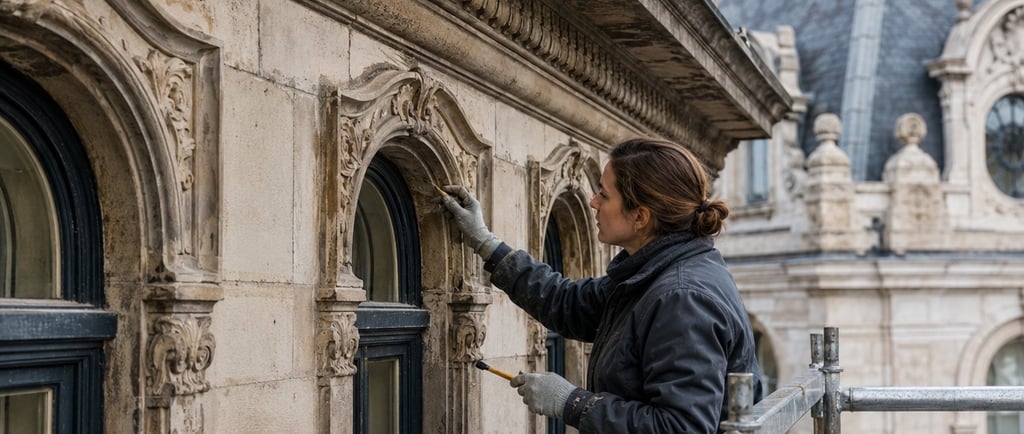
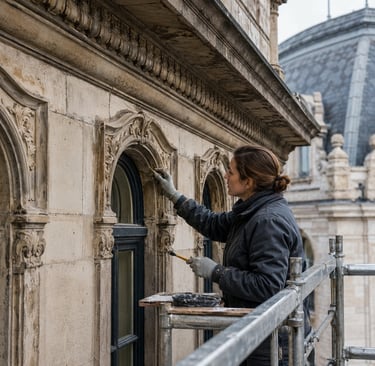
I have always been fascinated by old buildings.
Whenever I travel, whether around the United States or overseas, I find myself looking at the architecture, the materials, the construction methods, and, of course, the age of the buildings. It is hard for someone in construction not to look at a centuries-old structure and wonder: How was this built? What has kept it standing? And what will it take to keep it standing for another hundred years?
I discussed this fascination in my book about ancient buildings in Italy, where I looked at structures that have survived for centuries and, in some cases, far longer. As a construction professional, I am naturally interested in what buildings are made of, how they were designed, and how their age affects their condition today.
Historic buildings are remarkable.
But they are not maintenance-free.
In fact, the older and more historically significant a building becomes, the more specialized its maintenance often needs to be.
Old Buildings Were Built Differently
One of the first things we need to understand is that historic buildings cannot always be treated like modern buildings.
The materials are different.
The construction methods are different.
The way the building handles moisture, heat, movement, and ventilation may also be completely different.
In my book on ancient buildings in Italy, I discuss how Roman-era construction relied heavily on natural materials such as stone, quarried rock, wood, timber, marble, and concrete.
Many historic buildings around the world were constructed using materials and techniques that today's contractors may rarely encounter.
That creates a challenge.
You cannot always take a modern repair product, apply it to a centuries-old wall, and assume you have solved the problem.
Sometimes you can actually make things worse.
A repair material may be too rigid.
A coating may trap moisture.
A replacement component may react differently to temperature changes.
A modern waterproofing system may prevent an old masonry wall from breathing the way it was originally designed to.
Historic building maintenance requires understanding not only what is damaged, but also how the original building was intended to perform.
Repair Is Not the Same as Preservation
There is a big difference between repairing a building and preserving it.
With a typical modern building, replacing a damaged component with a new product may be the obvious solution.
With a historic building, the original component may be part of the building's architectural or cultural significance.
That changes the conversation.
The goal may not simply be to make something look new.
The goal may be to stabilize it, repair it, and extend its useful life while preserving as much of the original material and character as reasonably possible.
That requires judgment.
It also requires professionals who understand historic construction.
Replacing original stone, decorative plaster, masonry, woodwork, or architectural features without understanding their significance can permanently change a building that has survived for generations.
Once original historic material is removed, you may never get it back.
Water Is Still One of the Biggest Enemies
Whether a building is ten years old or five hundred years old, water can cause serious problems.
But historic buildings can be particularly vulnerable because their waterproofing and drainage systems may be very different from what we use today.
Roofs age.
Mortar joints deteriorate.
Cracks develop.
Drainage systems become blocked.
Water enters through openings.
Moisture moves through masonry.
Sometimes the visible damage inside the building is only a symptom of a much larger problem happening somewhere else.
This is why specialized maintenance is so important.
Painting over a water stain does not stop the leak.
Patching a crack does not necessarily explain why the crack formed.
Replacing damaged plaster does not solve the moisture problem behind the wall.
The source needs to be investigated.
And with historic buildings, that investigation should consider how the original materials interact with water and moisture.
Small Problems Can Become Big Problems
Historic buildings have survived because generations of people maintained them.
That does not happen by accident.
A loose roof tile may seem minor.
A small crack may not look urgent.
A deteriorated mortar joint may go unnoticed.
A slow leak may continue for years.
But buildings do not repair themselves.
Small problems usually become larger problems when they are ignored.
Regular inspections are especially important for historic structures because they allow building owners and managers to identify deterioration early.
That means looking at roofs, exterior walls, masonry, windows, drainage systems, foundations, structural components, and other areas that may show signs of movement or deterioration.
The earlier you identify a problem, the more options you usually have.
Wait too long, and a maintenance issue can become a major restoration project.
The Building Has to Tell You Its Story
One thing I have learned during my career is that you need to look at the entire building.
Do not just look at the crack.
Ask why it is there.
Do not just look at the water stain.
Ask where the water came from.
Do not just replace the deteriorated material.
Ask what caused it to deteriorate.
Historic buildings often carry evidence of everything that has happened to them.
Original construction.
Past renovations.
Previous repairs.
Water intrusion.
Structural movement.
Changes in use.
Sometimes even repairs made decades ago are contributing to today's problems.
That is why investigation matters.
Before making major repairs, we need to understand what we are looking at.
Modern Improvements Require Careful Planning
Historic buildings often need to accommodate modern life.
Electrical systems may need upgrading.
Plumbing may need replacement.
Fire protection may need improvement.
Heating, ventilation, and air-conditioning systems may need to be installed.
Accessibility improvements may be required.
The challenge is integrating these systems without unnecessarily damaging the historic building.
You cannot simply start cutting through old walls and drilling through structural components without understanding what is there.
Every modification needs to be considered carefully.
The objective should be to improve safety and functionality while respecting the building's original construction.
That requires coordination between owners, architects, engineers, contractors, preservation specialists, and inspectors.
Maintenance Is What Keeps History Standing
When we visit historic places, we often admire buildings that have been standing for hundreds or even thousands of years.
It is easy to think they survived simply because they were built better.
Good construction certainly matters.
But maintenance matters too.
These buildings have been repaired.
They have been reinforced.
They have been restored.
Damaged materials have been addressed.
And generations of people have made decisions about what should be preserved and how.
In Italy, I saw structures and remnants of structures that demonstrate just how long construction can endure. Some surviving portions stand dozens of feet high even though much of the original building around them is gone.
Historic buildings remind us that construction can outlive the people who designed and built it.
But that longevity comes with responsibility.
The Bottomline
Historic buildings require specialized maintenance because they are not modern buildings with a few extra years on them.
They were built with different materials.
Different methods.
Different technologies.
And often for a completely different way of life.
Maintaining them properly means understanding what is original, identifying what has changed, investigating why deterioration is occurring, and selecting repairs that work with the building instead of against it.
The goal is not to freeze a historic building in time.
The goal is to keep it safe, functional, and standing while respecting the history that makes it worth preserving.
After all, these buildings have already survived generations.
With the right maintenance, inspections, repairs, and professional oversight, we can help make sure they are still here for the generations that come after us.
Lance Luke
National Building Expert


Lance Luke 2026 © International Building Expert
LANCE LUKE
International Building Expert — Commentary, Books & Global Insights
Building safety expertise across continents. From forensic analysis to historic preservation.
CONNECT
(808) 754-3425
lanceluke@hawaiibuildingexpert.com